
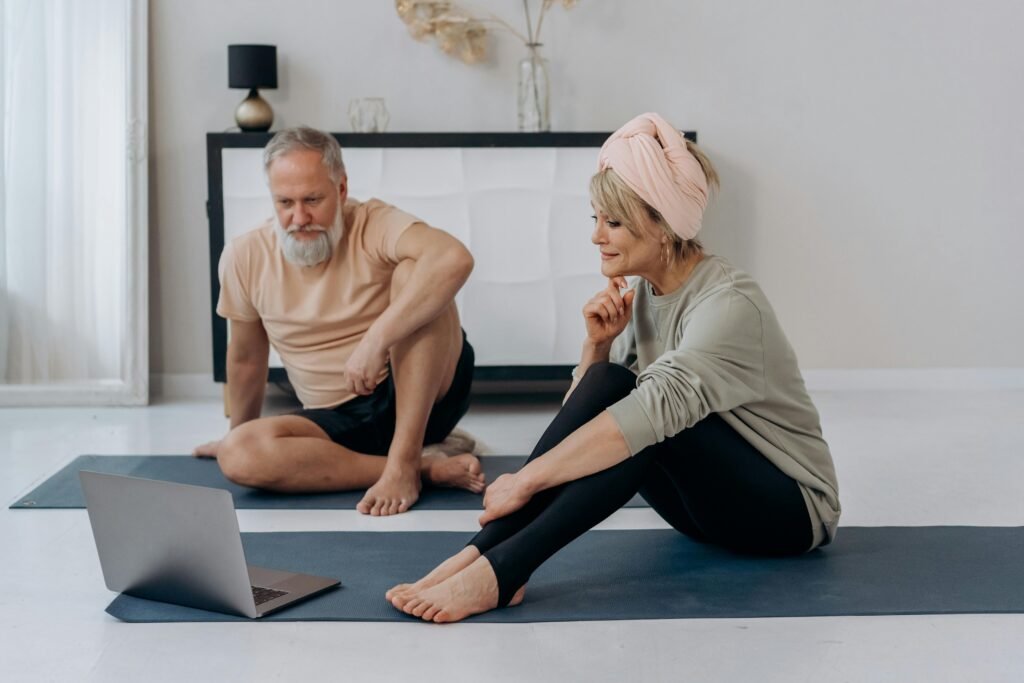
Balance After 60: Staying Steady, Confident and Independent
Getting older changes some things so gradually that we hardly notice them at first.
Balance can be one of them.
Maybe you hold the railing going down the stairs when you didn’t before.
Maybe you’re a little more careful walking across ice or uneven ground.
Maybe getting on a ladder doesn’t seem like quite as good an idea as it did 20 years ago.
At 79, I don’t think there’s anything wrong with being more careful.
In fact, I’ve come to believe that knowing when to be careful is one of the advantages of getting older.
But there’s a difference between being sensible and becoming so worried about falling that we stop doing things we enjoy.
Staying steady on our feet is an important part of staying independent.
Falls Are Worth Taking Seriously
This isn’t something I want to exaggerate, but it isn’t something we should ignore either.
Falls become more common and potentially more serious as we get older.
Our strength can change.
Our eyesight can change.
Some medications can cause dizziness or affect alertness.
Problems with our feet or footwear can make a difference.
And things around our own homes can become hazards without us realizing it.
That’s why I think balance deserves attention before a fall happens rather than afterward.
Start With the House
Before looking for a special exercise program or buying another product, I’d look around the house.
Sometimes the simplest improvements are right in front of us.
Are there loose rugs that slide?
Electrical cords across walking areas?
Poor lighting in hallways?
Clutter on stairs?
A bathroom floor that becomes slippery?
Steps without a secure handrail?
Shoes or slippers that don’t provide good footing?
None of these changes is exciting.
But making a home easier and safer to move around in makes sense at any age.
And unlike many things we’re sold as we get older, most of these improvements don’t require an expensive product.
Strength and Movement Matter Too
One thing I’ve learned is that doing less isn’t always the answer to getting older.
If we’re concerned about falling, our instinct may be to become more cautious and move less.
But maintaining appropriate physical activity can help preserve strength and mobility.
That doesn’t mean everyone should begin a strenuous exercise program.
What is appropriate for one 65-year-old may be completely inappropriate for another person at 85.
Walking, strength work and balance activities can all be useful, but health conditions, medications and previous falls can change what’s appropriate for an individual.
If you’re uncertain about what’s safe for you, that’s a good conversation to have with your healthcare provider or a physical therapist.
The goal isn’t to prove how much you can do.
It’s to keep doing what you safely can.
Don’t Ignore Changes in Your Balance
I think this is particularly important.
If you suddenly become dizzy, unsteady or begin falling when that wasn’t happening before, don’t simply assume:
I’m getting old.
There can be many reasons for changes in balance.
Medication can sometimes play a role.
Vision can matter.
Hearing and inner-ear problems can matter.
Blood pressure and other medical conditions can matter.
Sometimes the answer may be relatively simple.
But you can’t address a problem if you don’t know what’s causing it.
A noticeable or unexplained change in balance deserves medical attention rather than an internet diagnosis.
There’s Nothing Wrong With Using the Railing
When I was younger, I probably didn’t think twice about stairs.
Today, if there’s a railing, why wouldn’t I use it?
I don’t see that as losing independence.
I see it as using something that was installed for exactly that purpose.
The same applies to many other precautions.
Turn on the light.
Slow down on ice.
Wear appropriate shoes.
Ask someone else to climb the ladder.
Take your time getting up if you feel lightheaded.
Sometimes confidence means knowing you can do something.
Sometimes confidence means knowing you don’t have to prove it.
Falling and Fear of Falling Are Two Different Problems
A person doesn’t necessarily have to fall to begin worrying about falling.
One close call may be enough.
And once we’re worried, it’s easy to start avoiding things.
Maybe we stop taking walks.
Maybe we avoid stairs.
Maybe we don’t go somewhere because the parking lot looks difficult.
That can gradually make our world smaller.
I don’t think the answer is pretending there’s no risk.
The better approach is understanding the risk and doing reasonable things to reduce it.
If fear of falling is beginning to change what you do every day, it may be worth discussing that with a healthcare professional. There may be ways to improve strength, balance or confidence safely.
Be Careful With Products Promising to “Fix” Balance
This is one part of the original version of this article that I’ve changed my thinking about.
There are plenty of products and programs marketed to older adults with claims about improving balance or preventing falls.
Some may be useful.
But I wouldn’t assume that a program is appropriate simply because its advertising says it’s designed for seniors.
Balance problems can have different causes.
A program that helps one person may not address another person’s problem at all.
Today, I would want much stronger evidence before recommending any particular product to readers of Reinvent After 60.
That’s part of something I’ve learned while building this website:
A product being available for me to promote isn’t enough reason for me to recommend it.
Independence Isn’t About Taking Unnecessary Chances
I’ve done a lot myself during my lifetime.
Home repairs.
Electrical work.
Plumbing.
Fencing.
Flooring.
Projects where climbing, lifting and crawling around were simply part of getting the job done.
I still enjoy doing things myself.
But at 79, I also have to recognize that the consequences of a fall could be very different from when I was 40.
That doesn’t mean I have to stop doing everything.
It means I have to make better decisions about what I do myself and what I let someone else handle.
That’s not giving up independence.
That’s protecting it. I’ve found the same idea applies to confidence as we get older, which I wrote about in Confidence After 60: Why It Can Change — and What I’ve Learned at 79.
A Few Simple Things Worth Considering
You don’t need to become afraid of falling.
You do need to pay attention.
Look around your home for obvious hazards.
Use handrails.
Keep frequently traveled areas well lit.
Wear footwear that gives you secure footing.
Keep moving within your abilities.
Have your vision checked regularly.
Review medications with your healthcare provider when appropriate.
And don’t ignore a new problem with dizziness or balance.
None of these guarantees that you’ll never fall.
Life doesn’t offer guarantees like that.
But they’re sensible ways to reduce avoidable risks while continuing to live your life.
Final Thoughts
Getting older doesn’t mean we should become afraid of moving.
And being careful doesn’t mean we’ve become weak.
At 79, I want to continue doing as much for myself as reasonably possible.
I want to stay active.
I want to remain independent.
And I want to continue doing things I enjoy.
But I’ve also learned that independence isn’t measured by whether I’m willing to take every risk I took when I was younger.
Sometimes the smarter choice is slowing down.
Sometimes it’s holding the railing.
Sometimes it’s asking for help.
And sometimes it’s recognizing that something has changed and getting it checked.
The goal isn’t proving that we’re still young.
The goal is staying healthy and independent enough to keep enjoying the life we have.