
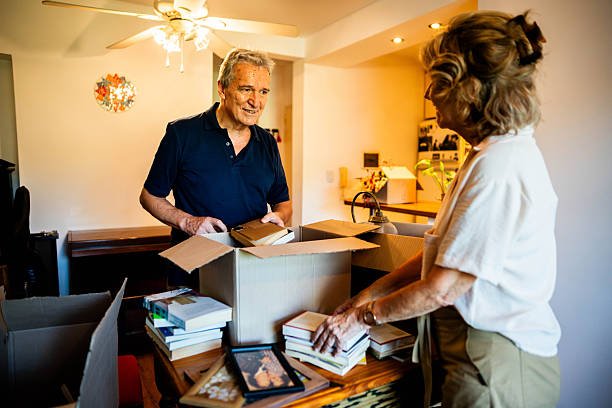
Why Having Less Stuff Can Make Life Easier After 60
Over the years, most of us accumulate a lot of stuff.
Some of it we need. Some of it we love. Some of it reminds us of important people and wonderful times in our lives.
And then there’s the other stuff.
Things sitting in closets that haven’t been touched in years. Boxes in the basement we haven’t opened since we moved. Clothes we haven’t worn in a decade. Kitchen gadgets we forgot we owned.
At some point after 60, I think many of us begin looking at all these possessions a little differently.
The question becomes less:
“What else do I need?”
And more:
“Do I really need everything I already have?”
I’ve come to believe that having a little less can actually make life easier.
Not because we need to become minimalists.
Not because there’s anything wrong with owning things.
But because everything we own eventually requires some combination of our space, attention, maintenance—and sometimes our money.
I’ve found that some of the best changes at this stage of life are often the simplest.
More Stuff Means More to Take Care Of
When we’re younger, accumulating things can be part of building a life.
We buy a home. Furniture. Tools. Clothes. Decorations. Kitchen equipment. Hobby supplies.
We raise families, and even more things come into the house.
Before we know it, decades have passed.
The garage is full.
The basement is full.
The closets are full.
And every one of those things has to live somewhere.
The less unnecessary stuff we have, the less we have to organize, clean, move, repair and worry about.
That’s one reason simplifying can feel so good.
Start With the Things You Don’t Care About
One mistake people make with decluttering is starting with the hardest things.
Family photographs.
Keepsakes.
Things that belonged to parents or grandparents.
I wouldn’t start there.
Start with the easy things.
A kitchen drawer full of gadgets you never use.
Clothes that haven’t fit in years.
Old magazines.
Expired products.
Duplicate tools.
Electronics that haven’t been turned on for years.
Things you wouldn’t even notice were gone.
Getting rid of those things doesn’t feel like a sacrifice.
It feels like getting some space back.
Don’t Throw Away Your Memories
There’s a big difference between clutter and memories.
A photograph of your children when they were young isn’t clutter just because it’s old.
Neither is something your spouse gave you, an item that belonged to your parents, or something that reminds you of an important moment in your life.
At our age, some possessions carry stories that can’t be replaced.
I wouldn’t let anyone tell you that you have to get rid of something meaningful simply because you haven’t “used” it lately.
Keep the things that matter.
The goal isn’t to own as little as possible.
The goal is to make room for the things that mean the most.
Your Children May Not Want Everything
This can be a difficult realization.
We sometimes keep things because we think our children or grandchildren will want them someday.
Sometimes they will.
Sometimes they won’t.
Their homes, tastes and lifestyles may be very different from ours.
Rather than guessing, ask them.
You may discover that your daughter would love one particular piece of furniture but doesn’t want the entire dining room set.
A grandchild may treasure your old watch but have no interest in boxes of other belongings.
Knowing what matters to them can make decisions easier.
And if there’s something special you’d like someone to have, there can be real pleasure in giving it to them now and seeing them enjoy it.
Less Clutter Can Make Everyday Life Easier
Think about how much time we spend looking for things.
Where are the keys?
Where did I put that bill?
Which drawer has the batteries?
Where is that screwdriver?
When drawers, closets and cabinets aren’t packed with things we rarely use, the things we actually need become easier to find.
Cleaning becomes easier too.
There’s less to move.
Less to dust.
Less to organize.
And sometimes simply walking into a less cluttered room feels better.
The more time we spend at home, the more I appreciate having a home that’s comfortable and enjoyable. That’s something I talked about in why my wife and I enjoy staying home more than we used to.
You Don’t Have to Do the Whole House
This is important.
You don’t need to announce:
“This weekend I’m decluttering the entire house.”
That sounds exhausting before you even begin.
Try one drawer.
One shelf.
One closet.
Maybe spend 15 or 20 minutes.
Make three simple decisions:
Keep it.
Give it away.
Get rid of it.
Then stop.
You can always do another drawer tomorrow.
Small improvements add up.
Give Useful Things Another Life
Getting rid of something doesn’t necessarily mean throwing it in the garbage.
Good clothing can be donated.
Furniture can go to someone who needs it.
Tools can be given to children, grandchildren or neighbors.
Books can find new readers.
Sometimes it’s easier to let something go when you know someone else can actually use it.
Instead of thinking:
“I’m getting rid of this.”
Think:
“Someone else can use this now.”
That’s a very different feeling.
Be Careful About Buying More
There’s another side to simplifying.
Once you’ve spent time getting rid of things you don’t need, you start thinking differently before bringing new things into the house.
I like a simple question:
“Where am I going to put this?”
If you don’t have a good answer, maybe you don’t need it.
Another good question is:
“Will this make my life better—or will it just become another thing I have to take care of?”
That doesn’t mean we should stop buying things we enjoy.
It simply means buying more intentionally.
Gary’s Thoughts
At this stage of life, I don’t think having more things necessarily makes life better.
I’d rather have a home filled with things we actually use and things that mean something to us.
There’s nothing wrong with keeping possessions that bring back good memories. I’ve accumulated plenty over the years myself, and I certainly wouldn’t suggest throwing everything away just because we’re getting older.
But there’s also a certain freedom in realizing that we don’t need to keep everything we’ve ever owned.
Sometimes simplifying isn’t about giving something up.
It’s about making life a little easier.
And after 60, I think that’s a pretty good trade.
The older I get, the more I believe that enjoying life has less to do with what we own and more to do with appreciating what we already have. That’s also at the heart of what really matters most when it comes to enjoying life after 60.
Start With One Drawer
If this article has you looking around your house and thinking, “Where would I even begin?” don’t worry about the entire house.
Pick one drawer.
Spend 15 minutes going through it.
Keep what you use.
Keep what matters.
Let go of what doesn’t.
Then enjoy having one drawer that’s a little easier to open.
Tomorrow, maybe you’ll do another one.
Living more simply after 60 doesn’t require having less of everything. It means having more of what matters—and less of what doesn’t.